
Solution 04
Every discipline checked against one specification.
A deterministic engine holds mechanical, electrical, firmware, software and AI to the same spec and flags the moment one drifts.
The problem
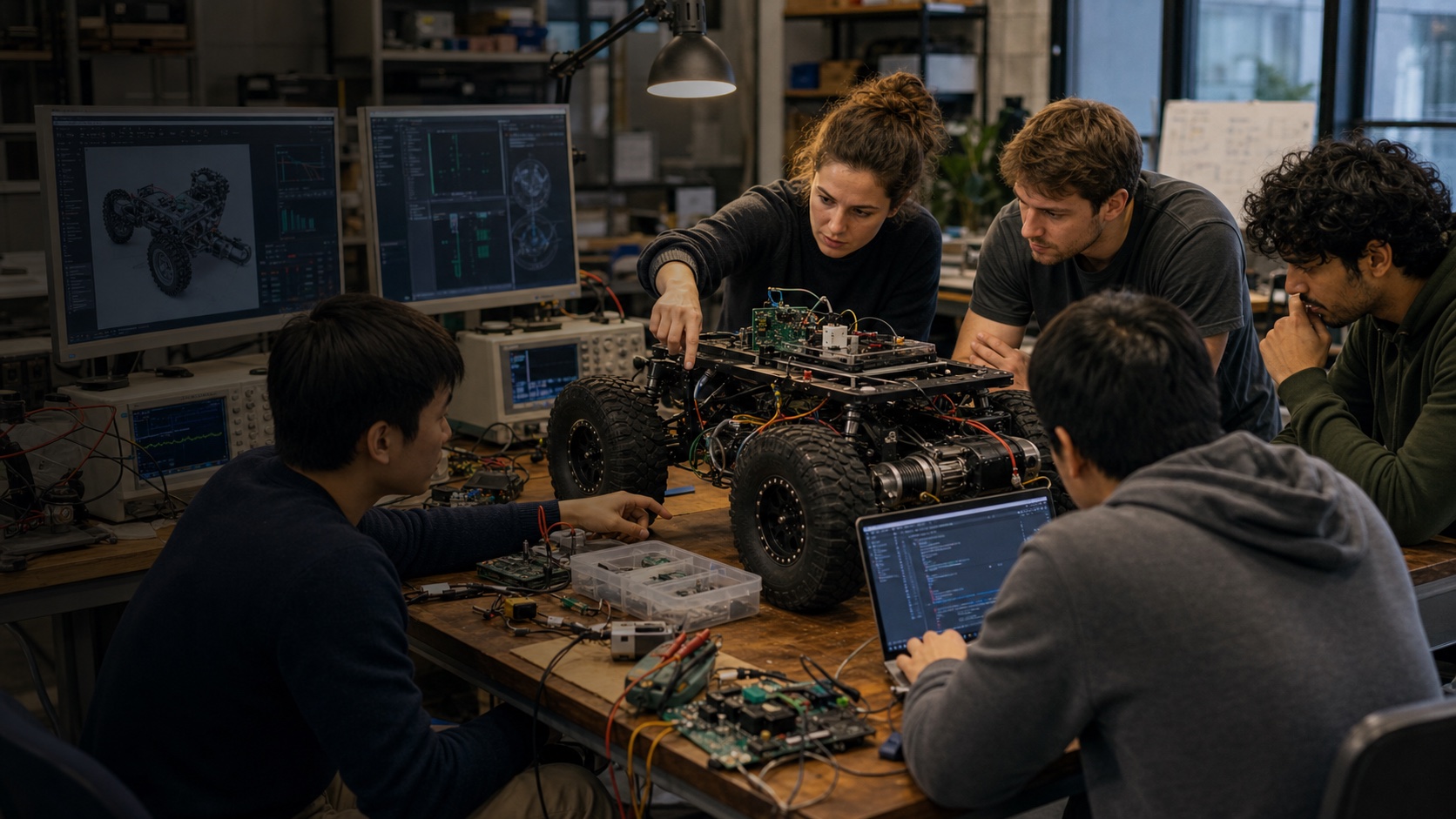
Mechanical, electrical, firmware, software and AI quietly diverge until the product no longer works as a whole.
NIST reported that an engineering change can cost 10× more when caught during integration than during design. Read more
The Aberdeen mechatronics benchmark reported that 68% of respondents saw mechanical/electrical synchronisation as a top development problem. Read more
Lifecycle Insights research cited by Design World reported typical PCB respin costs in the $28k–$44k range. Read more
How Mitoma Systems solves it
Conflicts surface where things actually break.
One engine, every discipline
Rule-based checks compare all five disciplines with the same agreed specification. Each conflict comes from a repeatable engineering check rather than an AI guess.
Validated across boundaries
Schematic pin assignments are matched to firmware GPIO config. Power budget is matched to structure, to thermal, to compliance. The places things actually break are exactly the boundaries Mitoma Systems checks.
Conflicts become assigned actions
Each conflict is assigned to the specialist who owns it, together with the rule that was broken.
Disciplines that used to diverge in silence now reconcile on screen. Conflicts surface while a fix is cheap, not after the build, when it isn’t.
Proof in the product
Validated before you cut metal.
Conflicts across power, structure, autonomy and compliance surface while the design is still on screen, each one carrying the cited rule a reviewer can check.